
Spending a few hundred dollars to fix a three-year-old phone might feel like a mistake, but in 2026, it is often the smartest financial move you can make. With the average price of a new smartphone climbing to $581, many users find themselves paralyzed by the choice of phone screen repair vs replacement. You want a device that works, but you don’t want to overpay for a fix on a phone that is already halfway to the junk drawer.
It is frustrating to deal with an unresponsive touchscreen or a web of glass that cuts your fingers. We understand the confusion between simple glass cracks and terminal LCD damage. This guide promises to clear the fog. You will learn exactly how to determine if your screen needs a professional fix, a full display swap, or if it is time to move on to a newer device.
We will apply the “50% Rule” to your specific model and look at how 2026 software support cycles change the math on repairs. By the end of this article, you will have a clear path forward and the confidence to stop squinting through a broken display. Let’s get your mobile life back on track without wasting your hard-earned money.
Key Takeaways
- Identify the difference between a cosmetic glass crack and a terminal display failure like bleeding pixels or vertical lines.
- Apply the 50% rule to the phone screen repair vs replacement decision to avoid overpaying for an aging device.
- Understand why a full assembly replacement is often more reliable than a simple glass-only fix.
- Verify your phone’s software longevity in 2026 to ensure it remains secure and functional after the repair.
- Determine if your current device is worth restoring or if an upgrade to a certified refurbished model is the better investment.
Assessing the Damage: Is it Just Glass or a Broken Display?
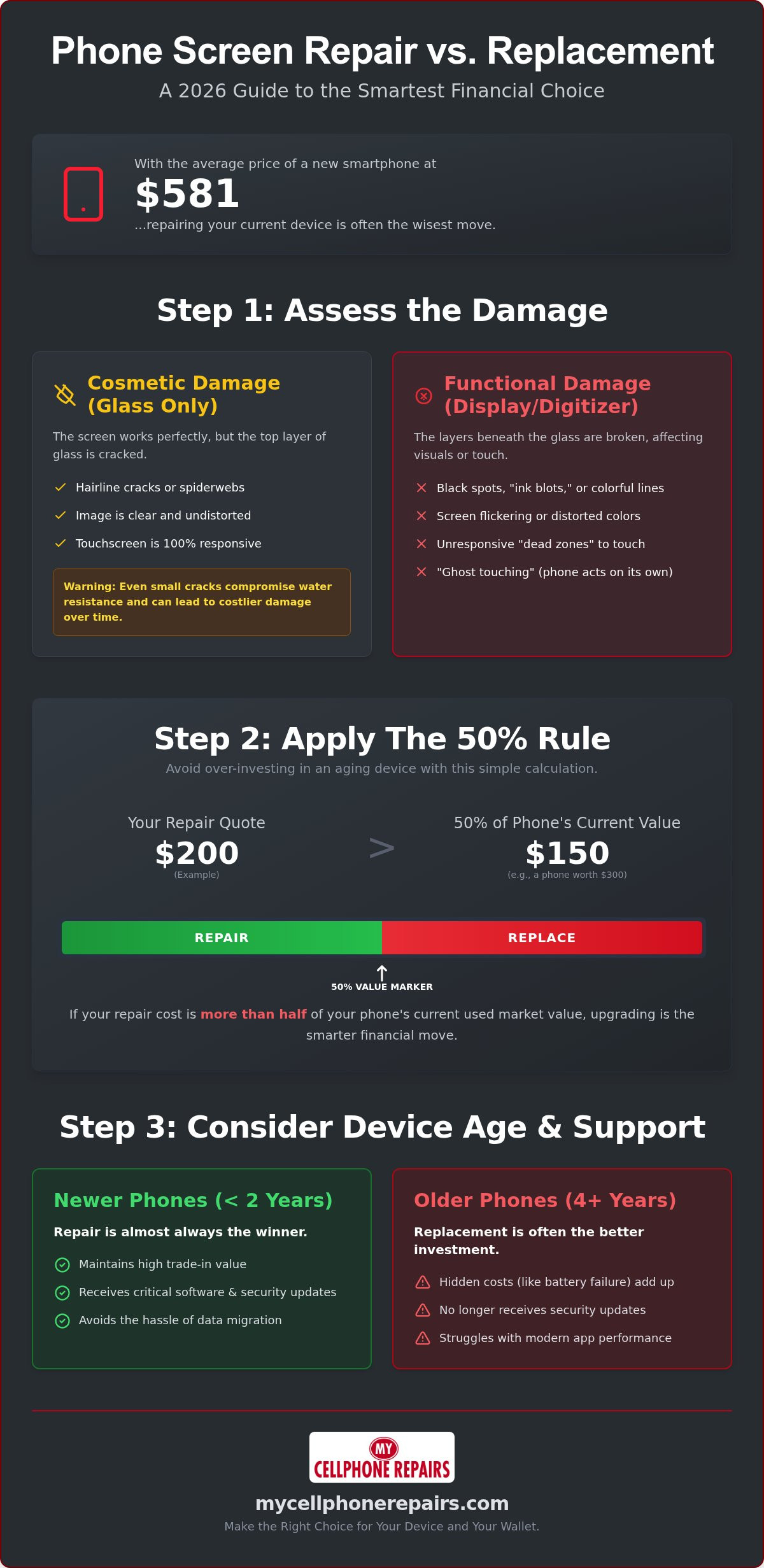
Before you decide on phone screen repair vs replacement, you must determine exactly what is broken. Most modern smartphones use a multi-layered display stack. The top layer is protective glass. Beneath that lies the digitizer, which senses your touch, and the actual display panel (LCD or OLED) that produces the image. A crack in the glass is annoying, but damage to the layers underneath is a functional emergency.
Start by running a simple diagnostic. Turn your brightness up and open a solid white background. Look for “bleeding” pixels that look like ink blots or bright vertical lines. These are clear indicators of a compromised display panel. Next, test your touch sensitivity. Open a drawing app and try to scribble over every single centimeter of the screen. If you find dead zones where the phone ignores your finger, your digitizer is failing.
Signs Your Display Assembly is Compromised
Black spots that look like ink blots are a major red flag. These spots often grow over time as air and moisture seep into the display layers. You might also notice your phone acting on its own. This “ghost touching” phenomenon happens when the digitizer sends false signals to the processor. If your screen flickers or shows distorted colors even after a hard reboot, the hardware is likely failing. For users facing these specific issues, check our guide on iPhone touchscreen not responding for deep troubleshooting steps. Understanding these failure points is a key part of the Right to Repair movement, which advocates for better consumer access to diagnostic information.
When the Damage is Only Cosmetic
Sometimes the damage is strictly on the surface. A single hairline crack or a spiderweb pattern that doesn’t affect the image or touch is usually cosmetic. Your phone might still be fully functional. However, don’t assume it’s safe to wait. Even minor cracks compromise the structural integrity of the device. They break the factory seal that keeps out dust and liquid. Neglecting a small crack often leads to internal corrosion. This can force you to learn how to fix water damaged iPhone issues once humidity enters through the broken glass. Identifying the depth of the damage is your first step toward a cost-effective resolution.
The 50% Rule: When to Repair Your Screen vs. Buying a New Phone
Deciding on phone screen repair vs replacement often comes down to a simple math problem. You shouldn’t base your decision on the original price you paid for the phone three years ago. Electronics depreciate fast. Instead, look at the current market value for a used device in good condition today. If a professional repair costs more than 50% of what the phone is worth right now, buying a new or refurbished model is usually the better investment. With the average selling price of a new smartphone reaching $581 in 2026, many mid-range repairs still fall well below that 50% threshold.
Consider the Repair ROI. Ask yourself how many more months of usable life this fix buys you. If your screen is shattered but your battery is healthy and the software is still receiving updates, a repair is a high-value move. However, if you also notice a loose charging port or a battery that won’t hold a charge, those costs stack up. Factor in every required fix before you commit. It’s often more efficient to browse refurbished iPhone sales if your current device needs multiple major parts.
Scenario A: The Device is Under 2 Years Old
For newer flagships, professional iPhone screen repair is almost always the winner. These devices still hold significant trade-in value. Keeping the original hardware in top shape ensures you get the maximum credit when you eventually decide to upgrade. High-quality components maintain the factory-grade performance you expect from a premium device. It’s a low-friction way to restore a disruptive problem without the hassle of migrating your data to a new phone. You get a like-new experience for a fraction of the cost of a 2026 flagship. If you own a recent model, reviewing the iPhone 15 screen repair cost across official and independent service options can help you find the best balance of quality and price before committing to a provider.
Scenario B: The Device is 4+ Years Old
Legacy hardware presents hidden costs. Repairing a four-year-old screen might seem cheap, but you may soon face a failing power cell. When a battery replacement is added to a screen fix, the total bill can easily exceed the price of a high-quality refurbished model. In these cases, it’s often smarter to move on. A newer refurbished device gives you better hardware and a longer software support window for a similar price point. Don’t sink money into a device that the manufacturer will stop supporting next year.
Screen Repair vs. Full Assembly Replacement: What Technicians Do
When you weigh phone screen repair vs replacement, you’re actually choosing between two distinct technical philosophies. The first is glass-only restoration. This “surgical” approach involves stripping away the shattered top layer while keeping your original digitizer and display panel intact. It sounds like a great way to save money, but it requires extreme precision. Technicians use specialized vacuum heat separators and thin molybdenum wire to slice through the adhesive layers. This must be done without cracking the fragile OLED panel underneath, which is often as thin as a human hair.
Most professional shops prefer the full assembly replacement method for 2026 flagship devices. This is a modular swap where the entire display stack is replaced as a single, pre-bonded unit. It is significantly faster and eliminates the reliability issues common with glass-only fixes. There is no risk of leaving behind microscopic dust or air bubbles that ruin the visual experience. Our technician training program emphasizes these high-standard assembly swaps because they offer the best long-term durability. Using factory-spec assemblies ensures that integrated sensors, such as FaceID or under-display fingerprint scanners, continue to work exactly as intended.
The Risks of Glass-Only Repairs
Glass-only restoration is a high-stakes gamble for DIY enthusiasts and unequipped shops. Without a dedicated clean-room environment, dust particles often get trapped under the new glass during the lamination process. These tiny specks create permanent visual flaws that you can’t ignore. The separation process also subjects the display to high heat and physical pressure. One small slip can destroy the delicate display panel, turning a simple crack into a total blackout. This method has a much higher failure rate than modular replacements, often leading to ghost touching issues weeks after the fix.
Benefits of Full Display Replacement
A full assembly replacement restores your device to factory standards immediately. It provides a “like-new” experience with perfect color accuracy and touch response across the entire surface. Most high-quality assemblies include a new frame, which strengthens the structural integrity of your phone. This is vital if your device was dropped hard enough to dent the corners or twist the chassis. Because the components are bonded in a controlled factory setting, these repairs typically come with a more robust warranty. You get peace of mind knowing the entire display system is fresh, secure, and ready for another two to three years of use.
Beyond the Crack: Software Support and Device Longevity
A functioning screen is useless if your software is dead. When weighing phone screen repair vs replacement, you must look past the glass and check your “update runway.” In 2026, a device that no longer receives security patches is a liability. Your banking apps and personal data require the latest encryption standards to stay safe. Even a pristine display won’t protect you from modern malware if your operating system is obsolete.
Performance throttling is another factor to consider. As operating systems become more demanding, older CPUs struggle to keep up. You might fix the screen only to find that your phone lags during basic tasks. This happens because newer software is optimized for more efficient hardware. If your device is already stuttering, a new screen won’t restore its original speed.
IPhone vs. Samsung Support Cycles
Apple and Samsung have significantly extended their support windows. As of 2026, the iPhone 11 from 2019 is expected to receive iOS 27, marking seven years of consistent updates. Similarly, Samsung now provides seven years of OS and security updates for flagships like the Galaxy S24 series. If your device has three or more years of support remaining, a screen repair is a high-value move. However, if you are in the final year of security patches, it is time to consider an upgrade. Don’t invest in a device that will be digitally “terminal” in twelve months.
Hardware Fatigue in Older Devices
Internal components like the motherboard and flash storage degrade over time. A professional Samsung phone repair always starts with a full diagnostic to check these vital signs. We look for signs of hardware fatigue that could lead to a “cascade failure.” This occurs when fixing one part, like the screen, puts stress on another aging component, like the battery or charging port. If your internal hardware shows signs of wear, the repair cost might not be justifiable.
Repairing your device is the best way to reduce e-waste and protect the environment. It keeps heavy metals out of landfills and reduces the demand for new mining. If your hardware is healthy and your software is current, restoration is the responsible choice. If you aren’t sure where your device stands, visit My Cellphone Repairs for a professional assessment of your phone’s remaining lifespan.
Professional Restoration: Choosing the Right Path Forward
Your decision on phone screen repair vs replacement should align with your mobile needs for the next 12 to 24 months. If you need a high-performance device for work or photography, a professional restoration of a modern flagship is the most logical path. For those holding onto older models that struggle with 2026 software demands, upgrading to a certified refurbished device offers a fresh start without the high price tag of a brand-new release. It’s a pragmatic way to get better hardware while staying within a reasonable budget.
Some users find the technical side of hardware so compelling they choose a different route entirely. If you enjoy solving technical puzzles, consider cell phone repair technician training. Mastering the craft allows you to maintain your own hardware and opens doors to a specialized career in the growing restoration industry. It turns a frustrating technical crisis into a valuable professional skill set.
Why Expert Repair Beats DIY
Modern smartphones are more than just glass and circuits. They are tightly calibrated ecosystems. Professional shops use industrial-grade adhesives and specialized software to re-pair components with the motherboard. Attempting a DIY fix often results in the permanent loss of features like FaceID, TrueTone, or auto-brightness. These sensors require software-level handshake protocols that only professional tools can complete. A professional repair also carries a warranty on both parts and labor. This protects you from defective components that might fail a month after the fix.
Making the Final Call
Before you commit to a resolution, use this final checklist to confirm your direction:
- Cost: Is the repair bill less than 50% of the device’s current market value?
- Age: Does the phone have at least two years of software support remaining?
- Reliability: Is the damage limited to the screen, or are there internal risks like a dying battery?
Once you choose your path, secure your data immediately. Perform a full cloud or local backup before handing your device to a technician or migrating to a new one. This ensures your photos, messages, and banking credentials remain safe. Your next step is simple. Contact a trusted specialist for a professional diagnostic to confirm the damage depth and get an accurate quote for your phone screen repair vs replacement needs. Acting quickly prevents minor cracks from becoming major internal hardware failures.
Restore Your Mobile Productivity
Deciding on phone screen repair vs replacement is a balance of hardware health and financial logic. You now have the tools to evaluate your device based on the 50% rule and its remaining software support window. A cracked screen is more than a visual nuisance; it’s a vulnerability that leads to internal corrosion. Our expert technicians for Samsung and iPhone specialize in restoring your device to factory standards with professional precision. We act as a national repair authority to ensure you receive the most efficient service possible.
If the cost of repair exceeds your phone’s value, explore our certified refurbished iPhone inventory for a high-quality upgrade path. We value your time and intelligence, providing straightforward solutions that fit your specific needs. Stop squinting through shattered glass and regain a clear view of your digital world. Get a Professional Screen Diagnostic and Restoration Today. Your phone is a vital tool, and we are ready to help you keep it in top condition.
Frequently Asked Questions
Is it cheaper to repair a screen or buy a new phone?
Repairing is almost always the more affordable choice compared to buying a new flagship. Apply the 50% rule: if the fix costs less than half the phone’s current market value, you should choose repair. With the average price of a new smartphone reaching $581 in 2026, most professional restorations save you hundreds of dollars. This makes the phone screen repair vs replacement decision easy for devices that are less than three years old.
Can a cracked screen be repaired without replacing the whole display?
Technicians can perform a glass-only repair, but it is a high-risk process. This method involves separating the shattered top glass from the original display panel using specialized heat tools. Most professional shops prefer a full assembly replacement because it is more reliable. Swapping the entire display stack ensures your touch sensitivity and color accuracy remain at factory standards. It also eliminates the risk of leaving dust or air bubbles trapped under the glass.
How long does a professional phone screen replacement take?
Most professional screen replacements are completed in approximately 60 to 90 minutes. Modern smartphones use modular assemblies that allow for a fast and efficient swap. The exact duration depends on the specific model and the complexity of the internal adhesives. While the physical swap is quick, we include a rigorous testing phase. This ensures that your sensors, cameras, and touch response are fully functional before the device is returned to you.
Will repairing my screen delete my data?
A standard hardware repair does not affect the data stored on your phone’s motherboard. Your photos, contacts, and apps will remain intact throughout the process. However, we always recommend performing a full cloud or local backup before any service. This is a safety precaution in case the device requires a factory reset during the diagnostic phase. Protecting your personal information is a standard part of a responsible and professional repair journey.
Does a cracked screen affect the internal components of the phone?
Yes, a cracked screen breaks the protective seal that keeps out dust and moisture. Even a small hairline crack allows humidity to enter the chassis, which can lead to motherboard corrosion over time. Broken glass can also press against the delicate OLED panel, causing permanent display “bleeding” or dead zones. Leaving a crack unaddressed often turns a simple cosmetic fix into a much more expensive internal hardware failure that requires professional intervention.
Is it worth fixing a screen on a phone that is 3 years old?
It is worth fixing if the device still receives regular security updates and the battery is in good health. Many flagships from three years ago still have a significant “update runway” remaining in 2026. Check the current market value of your model. If the repair cost is less than half that value, restoration is a smart move. It extends the life of your current hardware and saves you from the high cost of a new upgrade.
What happens if I leave my phone screen cracked?
Leaving a screen cracked leads to “ghost touching” where the phone operates on its own. The glass shards can also cause physical injury to your fingers or ears. Over time, the damage will likely spread, eventually causing the entire display to go black. The open cracks also expose your phone to liquid damage from minor spills or rain. What starts as a small crack can quickly become a terminal failure that costs much more to resolve.
Can I replace my own phone screen to save money?
DIY screen replacement is extremely difficult and often leads to permanent damage. Modern phones use fragile ribbon cables and proprietary screws that are easy to break without specialized tools. You also risk losing critical features like FaceID or auto-brightness without professional calibration software. Most users find that the cost of the tools and the high risk of failure outweigh any potential savings. Professional technicians provide a warranty on parts and labor for your peace of mind. Before attempting any self-service, review a detailed breakdown of iPhone 15 screen repair cost options for 2026 to understand what professional service actually costs compared to the risks of a DIY approach.