
A good mobile repair technician doesn’t start by reaching for a screwdriver. The work begins with understanding the reported problem, assessing it, and identifying the hardware area that may be involved. The skills needed for a mobile repair technician combine careful diagnosis with hands-on hardware knowledge. Building them one step at a time makes the field easier to approach.
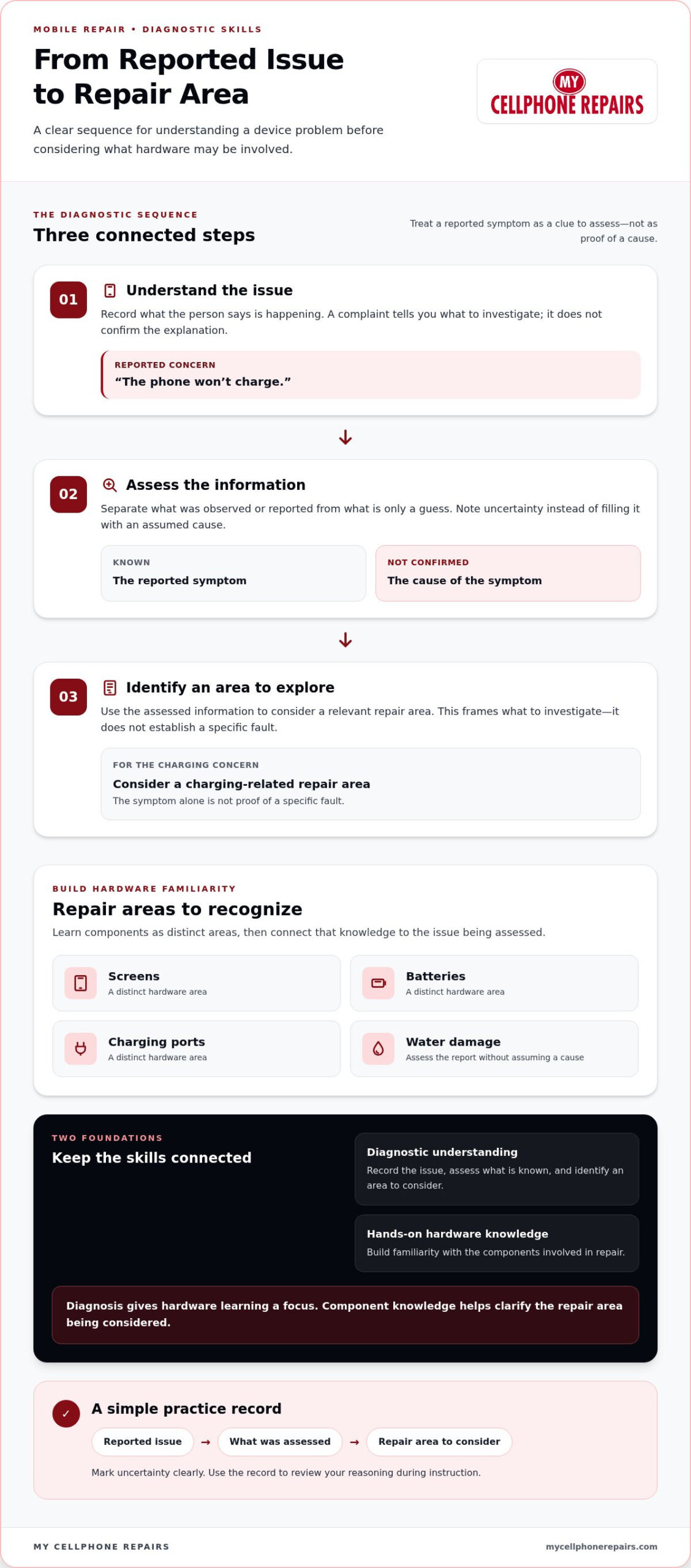
If terms like “diagnostics” and “hardware components” sound technical, think of a simple sequence: hear the issue, assess the information, then identify a repair area to explore. Each step gives the next one a clearer focus. You don’t need to know every technical term before you start learning.
This checklist covers practical skills to build, from troubleshooting to component knowledge. My Cellphone Repairs’ Technician Training Program includes courses with hands-on instruction covering hardware components and diagnostic techniques.
Key Takeaways
- Separate diagnostic thinking from hands-on hardware learning, then connect the two.
- Use a clear sequence: note the reported issue, assess the information, and identify a repair area to consider.
- Build familiarity with repair areas such as screens, batteries, charging ports, and water damage.
- Develop repair judgment by distinguishing an observed symptom from an assumed cause.
- My Cellphone Repairs’ Technician Training Program includes hands-on instruction in hardware components and diagnostic techniques.
Skills Needed for a Mobile Repair Technician: Start With This Checklist
Start with two foundations: diagnostic techniques and hands-on hardware knowledge. Diagnosis helps you understand a reported problem and identify the repair area to consider. Component knowledge gives you a clearer picture of the hardware involved. These are skills to develop, not abilities a beginner is expected to have already.
A mobile repair technician works to understand device issues and the hardware involved in repair. That practical focus distinguishes a repair skills checklist from broad career advice. The electronics technician overview gives general context for the wider technical role; mobile repair applies technical understanding to devices and their components.
What Does a Mobile Repair Technician Work to Understand?
The work starts with making sense of an issue. A technician needs to understand what problem has been reported, assess the information, and identify which repair area may be relevant. A complaint points to something to investigate. Knowledge of hardware helps frame what the repair may involve.
For example, screens, batteries, and charging ports are distinct hardware areas. Learning to recognize these categories gives you a concrete starting point. Focus on the relationship between the reported issue and the component area, rather than jumping straight to a repair.
How to Use This Mobile Repair Skills Checklist
Use the checklist as a learning map, not as a qualification or hiring standard. Separate diagnostic understanding from component knowledge so each skill has a clear place:
- Diagnostic understanding: Record the reported issue, assess what is known, and identify a repair area to consider.
- Hardware knowledge: Build familiarity with components such as screens, batteries, and charging ports.
- Practical development: Note which areas you want to explore through hands-on instruction.
As you read, mark each area as familiar, new, or something you want to practise. This turns a broad subject into manageable learning steps. First note what you understand, then choose a skill to develop through structured instruction.
Keep the two foundations connected. Diagnosis gives hardware learning a focus, while component knowledge helps you understand the repair area being considered. That’s a practical starting point for developing the skills needed for a mobile repair technician.
Diagnostic Skills: Learn to Identify the Repair Problem
A reported problem is a starting point, not a confirmed explanation. Diagnostic techniques are part of the Technician Training Program at My Cellphone Repairs. Diagnosis is a practical skill to build alongside hardware knowledge, not a step to skip on the way to a repair.
Diagnosis should guide the repair approach because a symptom alone doesn’t confirm its cause. A phone that won’t charge gives you a clear issue to assess, but it doesn’t establish which repair area is responsible. The goal is to move from the reported problem to a more informed understanding before considering a repair.
How Does a Technician Approach a Device Problem?
Use a simple sequence: recognize the reported issue, assess what has been described, then identify the repair area that may be relevant. Keep the known symptom separate from an assumption about its cause. A phone that won’t charge points to a charging-related concern to assess, but it isn’t proof of a specific fault.
The same approach applies to reported liquid damage. Understand the issue being reported, then consider the relevant repair topic without assuming a cause before assessment. The Bureau of Labor Statistics overview of electrical and electronics repairers provides broader context for repair work, while this sequence keeps the learning focused on mobile-device diagnosis.
Why Should Diagnosis Guide the Next Step?
Identifying a problem and choosing what to do about it are separate tasks. A symptom helps define what needs attention; assessment helps clarify which repair area to consider. That distinction is useful when weighing questions such as repair versus replacement. Diagnosis informs the decision, but it doesn’t prescribe one answer for every device or situation.
For practice, keep a short record of the reported issue, what you assessed, and the repair area you think may be relevant. Mark uncertainty instead of filling it with a guess. This makes your reasoning easier to review during instruction, where diagnostic techniques can be developed alongside practical knowledge of hardware components.
That’s the core of diagnostic skill: record the issue, assess it, and use what you learn to frame the next step. It gives the skills needed for a mobile repair technician a clear sequence to practise, without treating an early clue as a final diagnosis.
To develop this approach through instruction, explore the Technician Training Program, which includes hands-on instruction covering diagnostic techniques and hardware components.
Hands-On Hardware Skills for Screens, Batteries, and Ports
Diagnosis helps identify a repair area. Hands-on hardware learning builds familiarity with the components involved. My Cellphone Repairs’ Technician Training Program includes hands-on instruction covering hardware components, giving learners a practical way to explore repair topics as distinct areas.
For a beginner, start by understanding the categories of hardware work. Screen replacement is a screen-related repair topic. Battery replacement and charging-port repair are two other distinct areas. Begin by learning what each category refers to and how it differs from the others.
Which Repair Areas Can Illustrate Hardware Knowledge?
Familiar repair categories make component knowledge easier to organise. A screen issue points toward screen repair as a topic to understand. Battery replacement and charging-port work add two more areas to your learning map. Each gives you a specific subject to explore during instruction.
Water damage is another repair topic to recognize. It can involve an issue that needs assessment, but the category alone doesn’t establish whether a particular device can be repaired. Learning about a repair area helps you understand the work involved; an individual device still needs its own assessment.
Device examples can help connect a category to a real repair context. For instance, a Samsung phone repair guide offers a device-specific reference point. Use it to see how phone repair topics can be presented in context, alongside hands-on learning.
How Does Practice Support Component Familiarity?
Hands-on instruction makes component learning more concrete. Rather than only reading the words “screen,” “battery,” or “charging port,” you can explore hardware categories as part of structured training. Focus on understanding which component area a repair topic concerns, then build on that knowledge through practice.
Keep a simple record of the repair areas you’ve encountered. Note whether you can identify the component category and where you want more practice. This helps you distinguish recognizing a repair area from being able to carry out a repair independently.
A phone battery replacement guide provides another reference for learning about that repair category. Together, screens, batteries, charging ports, and water damage make the hardware side of the skills needed for a mobile repair technician easier to map and develop through structured practice.
Repair Judgment: Know When to Consider Professional Service
Recognizing a repair topic is one skill. Deciding whether to approach a task yourself or consider professional repair is a separate judgment. Beginners can start by understanding the questions involved and keeping an early impression separate from a final decision.
Assessing a repair need helps frame the next step; it doesn’t determine the outcome. A technician can consider the reported issue and relevant repair area without promising a particular result.
What Should Learners Understand About DIY and Professional Repair?
Think of DIY versus professional repair as a comparison to understand, not a rule with one answer for every situation. The useful learning goal is to recognize when professional repair is a relevant consideration, then avoid drawing conclusions about safety, cost, or success from the repair category alone.
As you learn, consider these questions:
- Is the decision being framed as DIY or professional repair?
- What repair area is under consideration?
- What information would help clarify the criteria for professional repair?
These prompts help identify what you still need to understand. Keep notes on the question and the available information rather than filling gaps with guesses.
How Should Certification and Quality Fit Into Skill Development?
Certification and repair quality are subjects learners may encounter as they develop their judgment. Treat them as separate questions: what does a certification represent, and how is quality being assessed? This keeps the discussion precise and avoids treating one label as a substitute for evaluating repair work.
Structured training provides a place to build practical knowledge alongside these questions. My Cellphone Repairs offers a Technician Training Program with courses and hands-on instruction covering hardware components and diagnostic techniques. The program guide provides related information for learners exploring how to develop their skills.
As you study, write down the repair question, what you understand so far, and what remains unclear. This keeps assessment separate from conclusions and gives you a focused way to consider DIY versus professional repair, certification, quality, and the criteria for seeking professional service.
Build repair judgment alongside technical learning. Explore the Technician Training Program as a practical next step in developing the skills needed to assess repair questions thoughtfully.
Build Mobile Repair Technician Skills Through Hands-On Training
A checklist helps you see what to learn. Training offers a structured way to explore those topics. My Cellphone Repairs’ Technician Training Program offers educational courses with hands-on instruction covering hardware components and diagnostic techniques. These areas connect two sides of repair work: understanding a device issue and becoming familiar with the hardware involved.
What Does the Training Program Cover?
The program covers hardware components and diagnostic techniques through courses that include hands-on instruction. For an aspiring repair specialist, these provide clear learning areas: understand device issues and build familiarity with the components involved in repair topics.
Keep your learning notes practical. If you’re studying diagnosis, write down what you need to understand about assessing a reported issue. If you’re focused on hardware, note the component areas you want to explore. This turns a broad interest in mobile repair into specific subjects to work on during instruction.
How Can a Beginner Use the Checklist Next?
Review the checklist and choose a starting point. Ask yourself which area feels less familiar: identifying a repair topic from a reported issue, or understanding the hardware components involved. You don’t need to choose a permanent specialty. Pick one learning priority and use it to guide what you focus on next.
- Start with diagnosis if you want to practise thinking through an issue before settling on a repair area.
- Start with components if you want to build familiarity with the hardware categories involved in repair.
- Connect the two by noticing how understanding an issue and knowing the relevant hardware inform one another.
This checklist is a starting map, not a test of whether you’re ready to work independently. Use it to name what you understand and what you want to learn next. Then focus on those areas during hands-on instruction. Separating diagnosis from component knowledge can make technical topics easier to approach.
The core skills needed for a mobile repair technician develop across diagnostic understanding and hands-on hardware learning. My Cellphone Repairs’ Technician Training Program brings both areas into its courses. Explore the program to learn more and choose a practical next step.
Choose Your Next Step in Mobile Repair
You don’t need to master every repair area before you begin learning. Choose one skill you want to understand more clearly, then use that focus to guide your next steps. The skills needed for a mobile repair technician develop through deliberate learning and practice, one area at a time.
For aspiring repair specialists in Towson, Baltimore County, Hyattsville, College Park, Cumberland, Vineland, Harrisburg, Kentwood, and Bowie, My Cellphone Repairs’ Technician Training Program offers courses with hands-on instruction in hardware components and diagnostic techniques.
Set a learning priority and keep track of the questions you want to answer. Explore mobile repair technician training through My Cellphone Repairs and choose a clear place to begin.
Frequently Asked Questions
What skills are needed to become a mobile repair technician?
The skills needed for a mobile repair technician include assessing reported problems and understanding the hardware involved in repair categories. Learners also benefit from developing repair judgment, such as separating an initial symptom from an assumed cause. Use those areas as a learning plan, not as a requirement to master everything before starting. Readers in Towson, Baltimore County, Hyattsville, College Park, Cumberland, Vineland, Harrisburg, Kentwood, and Bowie can use the same checklist to choose a starting point.
Can you learn mobile phone repair through hands-on training?
Yes. Hands-on training is one way to learn about mobile repair. My Cellphone Repairs offers a Technician Training Program with courses that include practical instruction covering hardware components and diagnostic techniques. A learner can explore how component knowledge relates to repair topics while developing an understanding of how reported issues are assessed.
What diagnostic techniques are useful in phone repair?
Useful diagnostic techniques include gathering a clear description of the issue, assessing the available information, and identifying a repair area that may be relevant. If a phone won’t charge, record that as the reported problem rather than deciding immediately what caused it. This keeps an observation separate from a conclusion and makes it easier to identify what information is still needed.
Which phone components should a repair technician learn about?
Start with components connected to common repair categories: screens, batteries, and charging ports. Learn to distinguish which hardware area a repair topic concerns before moving on to more detailed learning. Water damage is another repair area to recognize, though it isn’t a single component. Keeping component names and repair categories distinct helps you describe what you’re learning clearly.
How do you know when a phone needs professional repair?
Consider professional repair when assessing a problem and weighing it against a DIY approach. The reported issue and relevant repair area can help frame that decision, but they don’t dictate one answer for every phone. Treat the decision as something to assess rather than a conclusion based on a symptom alone.
Does phone repair certification matter for repair quality?
Certification and repair quality are related topics to understand, but one shouldn’t automatically be treated as proof of the other. Ask what a certification represents and what quality means in the repair context being discussed. For learners, this distinction helps keep claims precise while considering how repair work is evaluated.
Can a liquid-damaged iPhone be repaired?
My Cellphone Repairs provides water damage repairs, but that doesn’t mean every liquid-damaged iPhone can be repaired. The specific device and reported issue need to be assessed before drawing a conclusion. Describe what happened as clearly as possible and avoid treating an initial symptom as a confirmed cause. An assessment helps identify which repair area may be relevant without promising a particular outcome.