
Phone repair is becoming less about simple fixes and more about keeping essential devices working. The future of the mobile phone repair industry looks promising because people rely on their phones, while newer devices can demand more precise repairs. Profit isn’t automatic, though: it depends on matching repair skills and services to what customers need.
That outlook makes sense when a damaged phone is seen as a problem to fix, not an automatic reason to replace the device. For repair businesses, the opportunity is to deliver dependable work and adapt as devices become more complex.
This article examines the forces shaping the future of the mobile phone repair industry, what can affect profitability, and how specialist skills may open new opportunities. It also looks at where repair businesses can focus as customer needs and phone technology change.
Key Takeaways
- Assess repair-business profitability through customer demand, operating costs, and the types of repairs you can handle.
- Consider repair as an alternative to replacement when a device can be restored and remain useful.
- Specialist skills and a broader mix of repair services can help businesses respond to different customer needs.
- Newer hardware can make repairs more precise, increasing the value of technicians who can diagnose complex faults.
- Use projected market growth as context, then focus on the local demand and capabilities that shape a repair business’s prospects.
Q1: Is the Cell Phone Repair Business Profitable?
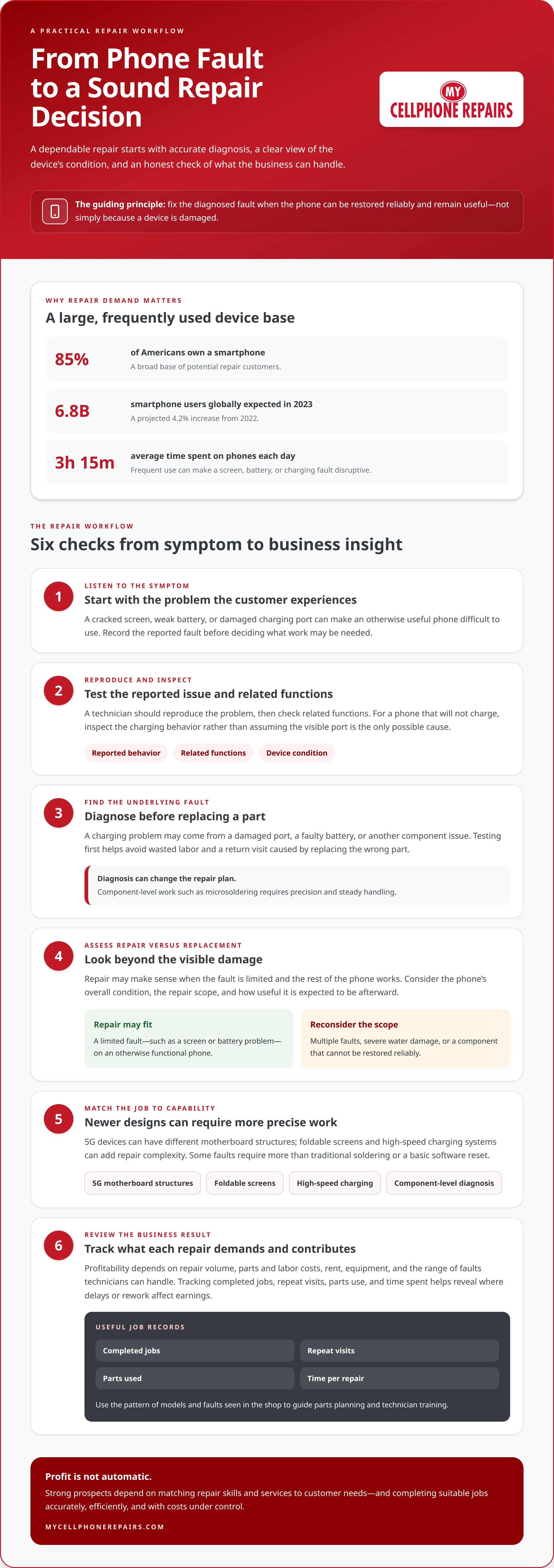
Phone repair can be profitable, but demand alone doesn’t guarantee a strong business. Revenue depends on repair volume, parts and labor costs, rent, equipment, and the range of faults technicians can handle. A shop focused only on simple screen repairs may miss jobs involving batteries, charging problems, or component-level diagnosis. Track completed jobs, repeat visits, parts use, and time spent per repair. These figures help show which services contribute to the business and where delays or rework affect earnings.
Right-to-repair legislation can influence which parts, tools, or repair information are available to businesses and consumers. New York passed a right-to-repair bill in December. Its specific scope determines which repairs or products it covers.
Smartphone ownership creates a broad base of potential repair customers. In the United States, 85% of Americans own a smartphone. Globally, smartphone users were expected to reach 6.8 billion in 2023, a 4.2% increase from 2022. People also spent an average of 3 hours and 15 minutes on their phones each day. That regular use makes faults such as a cracked screen, weak battery, or damaged charging port disruptive. Each fault can prompt a repair inquiry, but the business still needs to diagnose the device accurately and price the job sustainably.
Longer upgrade cycles can also support repair demand. The longer owners keep a smartphone, the more time there is for wear and accidental damage to appear. A battery that no longer holds charge or a port that fails to connect can make a working device difficult to use. Repair businesses can meet that need by identifying the fault and explaining the available remedy. Monitor which models and problems appear most often. That information can guide parts planning and technician training without assuming every older phone is worth repairing.
Good diagnostics help customers and businesses avoid unnecessary work. A technician starts by reproducing the reported problem, then checks related functions. For example, a phone that won’t charge may have a damaged port, a faulty battery, or another component issue. Replacing a part before testing the device can waste labor and lead to a return visit. Component-level repairs may involve microsoldering, which calls for precision and steady handling. Accurate diagnosis helps determine whether a focused repair can restore the phone or whether the damage extends further.
Repairing an expensive smartphone may make sense when the fault is limited and the rest of the device works. A damaged screen or failing battery may be a more practical problem to address than replacing an otherwise functional phone. The decision changes if the device has multiple faults, severe water damage, or a component that cannot be restored reliably. Compare the repair scope with the phone’s condition and expected usefulness afterward. This gives customers a clearer basis for choosing repair or replacement.
Changing phone designs make technical capability increasingly important. 5G devices can have different motherboard structures, while foldable screens and high-speed charging systems bring added repair complexity. Some faults require more than traditional soldering or a basic software reset. Businesses that invest in diagnostic skill and precise component work can take on a wider range of problems. Profitability therefore depends not just on how many smartphones need repair, but on whether a business can complete suitable jobs accurately, efficiently, and with controlled costs.
Repair as a cost-effective alternative to replacement
Repair may make financial sense when the fault is limited and the smartphone remains useful. A cracked screen, worn battery, or damaged charging connection may leave the rest of the device working. Replacing one failed part can preserve the phone’s value and avoid buying another device. The comparison should account for the phone’s overall condition, the repair needed, and how long the owner expects to keep using it. Repair may be less compelling if several major components have failed or the device remains unreliable afterward.
Customer preference matters, too. Some owners choose to repair badly damaged phones because they’ve already invested in buying them. That preference doesn’t make every repair worthwhile. A technician needs to identify the fault, explain the repair scope, and distinguish a replaceable part from deeper damage. For example, a broken screen on an otherwise functioning iPhone presents a different decision from a phone with both screen and motherboard faults. A clear diagnosis helps owners compare practical options instead of judging by visible damage alone.
Manufacturer repair access and genuine-part procedures vary by brand, phone model, and repair type. No single rule covers every independent repair or genuine part. Technicians need to understand the relevant device and repair process before choosing parts or starting work. A screen replacement and a board-level repair can involve different procedures. Clear communication about the proposed work helps customers understand what the repair involves.
Parts availability can also affect whether a repair is practical. A shop may not have the required screen or device-specific component in stock. To manage this, track which models arrive for repair, plan inventory around recurring needs, and explain when a part must be sourced. Data privacy requires equal care. Before service, technicians should clarify what access the repair requires, limit handling to what the task needs, and protect personal information during diagnosis. A charging fault, for example, shouldn’t require browsing a customer’s photos.
More advanced repairs can change the repair-or-replace calculation. EMMC and UFS storage replacements are among the challenges that can exceed basic repair methods. A technician must diagnose the underlying fault before deciding whether component-level work is suitable. If the storage component is implicated, the device’s condition and repair complexity matter. A simple screen repair and an EMMC replacement aren’t equivalent jobs, even when both phones appear unusable to their owners.
Phone designs keep evolving, so screens, storage, and other components may require different diagnostic approaches across models. A sound decision follows a clear sequence: identify the fault, assess the device’s condition, explain the repair scope, and weigh continued use against replacement. That process helps avoid paying for unnecessary work or discarding a phone with a focused, repairable problem. For a damaged screen, an iPhone screen repair may be one option to consider.
Specialist services and repair-business diversification
A focused service mix helps repair businesses address different device problems. Screen, battery, charging-port, and water-damage repairs each require distinct diagnostic steps. A shop can build specialist capability around common faults, then train technicians for more complex work. This gives customers clear options for different problems and helps businesses understand the tools, parts, and skills each repair type requires. Specialization matters because customers and service centers seek technicians who can handle complex faults. Skilled specialists can solve some problems more quickly and accurately.
Manufacturer repair services are another option customers may consider. Independent shops can define their role through the repairs they handle, their diagnostic process, and clear explanations of the work. Complex component faults may require specialized experience beyond routine part swaps. A business can decide which jobs match its equipment and technicians’ skills, then refer unsuitable work through an appropriate process. This helps avoid taking on repairs the team cannot complete properly and builds trust through realistic explanations rather than broad claims about every device.
Speed can influence where customers seek help. Some smartphone repairs take a few hours, while others take several days. The difference depends on the fault, parts, and repair complexity. A screen replacement may follow a more direct process than a device requiring board-level diagnosis. Shops can improve turnaround by organizing intake, diagnosing the fault early, and keeping commonly needed parts ready. They should give customers a time estimate based on the specific repair, rather than treating every job as a same-day task. Precision still matters more than rushing delicate work.
Refurbished phones and trade-ins create opportunities to assess devices and address faults before continued use or resale. Repair can extend a phone’s service life, reduce electronic waste, and offer an alternative to buying a new device. A damaged screen or weak battery may be the only issue affecting an otherwise usable phone. Repair businesses can contribute by identifying repairable faults and completing suitable work. This supports reuse and gives customers another option besides discarding a device.
Diversification works best when every service has a clear process. Start by recording recurring faults, then match them to technician skills, tools, and parts. For example, repeated charging problems may justify focused training in port diagnosis, while water damage calls for careful assessment before repair begins. Specialist technicians can address faults more accurately and may handle advanced jobs that basic methods cannot resolve. Businesses should weigh that potential against training time, equipment needs, and the risk of rework. The strongest service mix reflects real customer needs and the repairs the team can complete reliably.
More complex phone hardware and precision repairs
Newer phone designs can turn familiar faults into demanding repair jobs. A 5G device may have motherboard structures that require technicians to understand how components connect. A charging complaint, for example, can involve a fault in a 5G or high-speed charging circuit. Replacing an obvious part without tracing the fault may not solve the problem. Technicians need careful diagnostics before selecting a repair method. That shift makes advanced training and precision work increasingly relevant to repair businesses like My Cellphone Repairs.
Foldable screens present another challenge. Their design differs from a standard flat screen, so diagnosis and replacement require suitable handling. Hyper-charging systems add complexity to charging faults. A phone that charges slowly may not have a simple port problem. The technician needs to distinguish a damaged connection from a circuit-level issue. Matching the symptom to the fault helps prevent unnecessary part replacement and repeat work.
Traditional soldering and basic software resets often fail to resolve advanced IC issues. Some faults instead call for component-level diagnosis and replacement. CPU work can exceed basic repair methods, while EMMC and UFS replacements demand specific technical capability. Technicians need to identify the affected component before attempting these repairs. Guesswork can damage surrounding parts or leave the original fault unresolved. Precision, suitable tools, and a controlled process matter at every stage.
Different processor families also require specialized handling. Qualcomm Snapdragon, Exynos, custom smartphone series, and specialized tablet chipsets are among the platforms that require advanced precision. A technician must understand the device’s architecture before working near sensitive components. The same repair approach won’t suit every chipset or motherboard layout. Diagnostic skill helps determine whether a fault is isolated or part of a wider board problem.
Modern flagship smartphone models released in recent years integrate biometric security, advanced displays, and other sensors into the motherboard and other components in a closed design. That integration can make repairs more delicate. If a phone has a screen fault, a technician must consider connected functions during diagnosis and repair. A successful repair involves more than restoring the visible display. The device’s related features also need careful attention.
Battery and charging complaints show why diagnosis should start with the symptom. A phone that loses charge quickly may need a battery assessment, while a device that won’t charge may have a port or charging-circuit issue. Check the reported symptom, test related functions, then isolate the faulty component. This helps avoid treating different faults as if they have the same cause and gives customers a clearer explanation of the repair needed.
Repair businesses can prepare by building skill in diagnostics, board-level work, and delicate component handling. Training should connect each device type to its known repair challenges, such as foldable screens or 5G circuits. A technician should also recognize when a fault exceeds basic methods. That judgment protects the device and focuses effort on repairs the shop can complete accurately. As phone hardware evolves, precision becomes a core capability, not an optional extra.
What is the projected growth of the mobile phone repair industry in the U.S?
The U.S. mobile phone repair industry is valued at US$4 billion currently. That figure indicates a substantial existing market, but it doesn’t predict the earnings of an individual shop. Local demand, repair mix, operating expenses, and technician capacity all affect business results. A shop assessing its prospects should separate national market size from its own customer base. Count inquiries by device and fault, then compare completed repairs with costs and available technician time.
Global smartphone repair market estimates point to further expansion, though they describe a worldwide market, not the United States alone. The market was valued at US$185 billion in 2021 and was expected to grow to more than US$260 billion by 2026. Those figures suggest a broader growth outlook, but they shouldn’t be presented as U.S. revenue or as a guaranteed result for any business. They also reflect a forecast, not confirmation that the projected value was reached.
Several forces can support repair demand in the United States. Smartphone ownership is widespread, and people rely on devices for communication, work, and everyday tasks. A cracked display, failing battery, or charging fault can interrupt that use. Repair offers a way to keep a device functional rather than replace it immediately. The business opportunity depends on identifying faults accurately, completing appropriate work, and managing parts and labor efficiently.
Technology also shapes where growth may emerge. 5G devices, foldable screens, and high-speed charging systems can require more specialized diagnosis than basic part replacement. Advanced faults involving processors or storage components may need precision work. A repair business can respond by building technician skills in stages. Start with recurring repairs, track requests for complex work, and invest in training and equipment where customer demand supports it. Avoid taking on specialist jobs without the capability to complete them accurately.
For a U.S. shop, national and global estimates provide context, not a business plan. Use them alongside local evidence: which models customers bring in, which faults recur, and how often repairs can be completed profitably. For example, repeated screen or charging inquiries may justify parts planning, while occasional advanced board faults may not alone support major investment. Review the repair mix regularly as device designs and customer needs change. The future of the mobile phone repair industry will partly depend on businesses adapting their skills and services to these shifts.
Use these market trends to shape practical decisions, not promises. Build capability around repair requests you can serve well, then assess whether new services justify their costs. For device repair support, explore phone repair options.
My Cellphone Repairs: Samsung Phone Repair
My Cellphone Repairs handles Samsung Phone Repair for customers with damaged or malfunctioning Samsung phones. The company also repairs iPhone screens, MacBooks, and phone batteries. Choosing a repair starts with identifying the device and fault, then understanding the work needed to restore everyday use.
Turn to a repair service when a device problem disrupts normal use and you want to explore repair rather than replacement. Clear information about the problem helps direct the repair toward the right service. The best option depends on the device and fault, so don’t assume every symptom has the same cause.
For help with a Samsung phone or another listed repair, contact My Cellphone Repairs.
Build Your Next Step Around the Device
The future of the mobile phone repair industry will favor businesses that keep adapting their skills to changing devices. For phone owners, the next step is straightforward: identify the device and the problem, then choose a repair path that fits. A cracked screen, a Samsung phone fault, and a MacBook issue each call for the right repair service.
My Cellphone Repairs offers Samsung Phone Repair, iPhone Screen Repair, and MacBook Repair. These services give customers a direct place to turn when a device problem interrupts everyday use. Describe the issue clearly and focus on the repair you need. That helps start a practical conversation about restoring your device.
Contact My Cellphone Repairs to discuss a repair. Take the next step with confidence and get your device problem moving toward a solution.
Frequently Asked Questions
How are AI, automation, and diagnostic software changing phone repair?
AI and diagnostic software can help technicians narrow down possible faults, but they don’t replace hands-on inspection. A diagnostic result is a starting point: the technician still needs to test the device and identify the failed component. For example, charging symptoms may point to several possible causes. Automated checks can make routine testing more consistent, while skilled technicians remain essential for delicate component work and repairs requiring soldering.
How do repair costs compare with buying a new or refurbished phone?
Compare the repair scope with the device’s condition and the cost of a suitable replacement. Repair may be a practical choice if one fault affects an otherwise useful phone. Replacement may make more sense if the device has several serious problems. Consider refurbished phones as another option, then compare their condition and expected usefulness with the repaired device. A clear diagnosis makes the comparison specific to the phone, rather than relying on visible damage alone.
How are foldable phones, eSIMs, and sealed designs changing repairability?
Foldable phones can make screen repairs more demanding because their displays differ from standard flat screens. Sealed designs can also make internal components more difficult to access. An eSIM changes how a phone connects to a mobile network, but it doesn’t determine whether a screen or battery fault can be repaired. Technicians need to assess the specific model, damaged component, and repair process before deciding what work is suitable.
What skills, certifications, and tools will phone repair technicians need in the future?
Technicians benefit from strong diagnostic skills, careful component handling, soldering ability, and training on newer device designs. Useful tools depend on the repair and may include diagnostic equipment, precision hand tools, and soldering tools for component-level work. Certification requirements vary by program and employer, so technicians should understand the credentials relevant to their chosen work. In local repair markets such as Towson, Baltimore County, Hyattsville, College Park, Cumberland, Vineland, Harrisburg, Kentwood, and Bowie, practical skills help meet varied customer needs.
How is right-to-repair legislation affecting mobile phone repair businesses and consumers?
Right-to-repair legislation can affect which parts, tools, or repair information are available to businesses and consumers. Legislative changes may shape the repair options available to consumers and businesses. Its scope determines which repairs or products it covers.
Get it fixed at My Cellphone Repairs: most repairs are done the same day. Walk in or book online.
Book NowPhone frozen or acting up? See our step-by-step restart & reset guides →
Our locations
- Towson Mall825 Dulaney Valley Rd, Second Level, Towson, MD 21204
(410) 828-4404 - Grand Rapids3077 28th St SE, Grand Rapids, MI 49512
(616) 799-6996 - PG Plaza Mall (Hyattsville)3500 East-West Hwy, Mall at Prince George's, Target Entrance, Hyattsville, MD 20782
(301) 559-1105 - Bowie Town Center15630 Emerald Way, Bowie, MD 20716
(240) 614-3600 - Capital City Mall (Camp Hill / Harrisburg area)3604 Capital City Mall Dr, Camp Hill, PA 17011
(717) 919-7868 - Cumberland Mall (Vineland)3849 S Delsea Dr, next to Boost Mobile, Dick's Sporting Goods entrance, Vineland, NJ 08360
(856) 765-5049 - Mondawmin Mall2401 Liberty Heights Ave, Lower Level, Baltimore, MD 21215
(443) 826-7711 - Baltimore Inner Harbor100 East Pratt St, Suite 101, Baltimore, MD 21202
(443) 838-8989 - St Charles Mall (Waldorf)11110 Mall Cir, Waldorf, MD 20603
(301) 645-7755 - Alexandria7650 Richmond Hwy, Alexandria, VA 22306
(703) 341-6789