
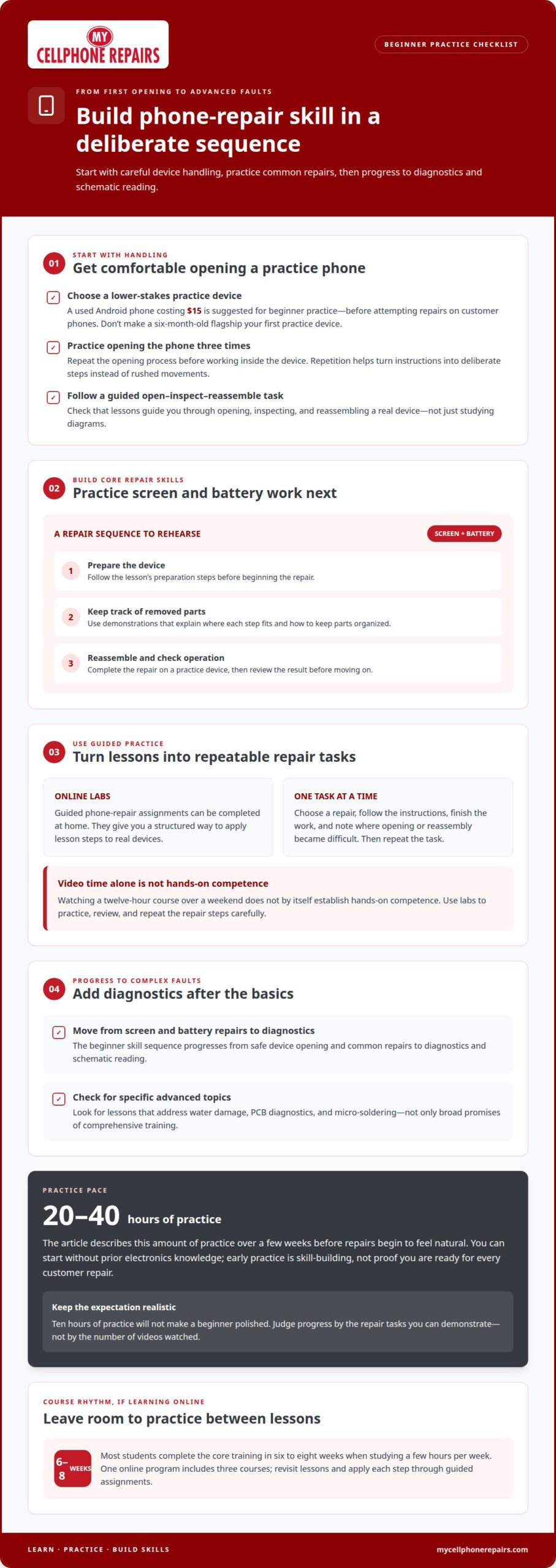
A course title alone doesn’t make training hands-on. For beginners, hands-on mobile phone repair training should build practical skills in a clear sequence: safe device opening, screen replacement and battery swaps first, then diagnostics and schematic reading. You can start without prior electronics knowledge, but expect to spend 20 to 40 hours practicing over a few weeks before repairs begin to feel natural.
It’s reasonable to want more than videos and theory. The right course gives you guided opportunities to work through repair tasks and build confidence before taking on more complex faults.
This guide explains how to find practical training, what to look for in lessons on water damage, PCB diagnostics, and micro-soldering, and how to judge whether a course suits a beginner. You’ll also learn how online courses can include guided repair assignments at home, and why steady practice matters more than rushing through lessons.
Key Takeaways
- Look for practical work with a smartphone, not video lessons alone, and build skills on a low-risk practice device before attempting complex repairs.
- Choose a learning format that fits your schedule and how you learn best, while ensuring it includes guided repair practice.
- Compare courses by the repair tasks they teach, the practice they provide, and how they progress from basic work to advanced diagnostics.
- Check whether the curriculum addresses water damage, PCB diagnostics, and micro-soldering, rather than relying on broad promises of comprehensive training.
- See how a dedicated technician training program can support your next step, and when professional Samsung phone repair is the practical choice.
Can I take a phone repair course online and still get real practice?
Yes, online training can include smartphone practice and guided repair labs. A course certificate documents training, but it is not automatically a government license. Licensing requirements can vary by location.
Practice With a Supplied Smartphone
A smartphone for practice gives each lesson a physical device to work on, not just diagrams on a screen. Check whether assignments guide you through opening, inspecting, and reassembling the device. Beginners are advised to practice opening a phone three times before working inside it. Repetition helps turn instructions into deliberate steps instead of rushed movements.
Screen and Battery Repair Practice
Screen and battery lessons should cover the repair sequence, from preparing the device to checking its operation after reassembly. Look for demonstrations that explain where each step fits and how to keep track of removed parts. A screen replacement is a useful example: follow the lesson, perform the repair on a practice device, then review the result before moving on.
Real-Device Practice and Lab Assignments
Guided phone repair lab assignments can be completed at home as part of an online course. They give learners a structured way to apply lesson steps to real devices. Watching a twelve-hour course over a weekend does not by itself establish hands-on competence. Use each lab to practice a task, note where the process becomes difficult, and repeat the steps until you can perform them carefully.
Practice on Inexpensive Used Phones
A used Android phone costing $15 is a suggested practice device for beginners, before attempting repairs on customer phones. It offers a lower-stakes way to learn how a device opens and how its parts fit together. Don’t make a six-month-old flagship your first repair practice device. Start with basic handling, then progress to screen or battery work as your technique improves.
Keep practice focused. Choose one repair task, follow the course instructions, and finish the work before switching to another device. Note which steps caused difficulty, such as opening or reassembling the phone. Then repeat the task on your practice smartphone. This steady approach makes online lessons more practical and helps you judge when you are ready to take on repair work.
Is a cell phone repair course worth it for a complete beginner?
Yes. You can start a cell phone repair course without prior electronics knowledge. Expect to learn basic repair methods before tackling complex faults. Ten hours of practice will not make a beginner polished. Treat early lessons as the start of skill-building, not proof that you are ready to perform every repair for a customer. A useful course provides a sequence to follow, practice tasks to complete, and a way to review what you have learned.
Online Learning Pace and Course Access
Online training works well when you need control over your study pace. You can revisit a lesson before attempting its repair task, then pause to apply each step. One online program includes three courses, giving learners a structured path through the material. Most students complete the core training in six to eight weeks when they study a few hours per week. This pace leaves room to practice between lessons instead of rushing to finish.
Guided phone repair lab assignments can also be completed at home as part of an online course. Use each assignment to connect an instruction to a physical task. For example, watch a lesson on a repair step, perform it, then review the result against the course guidance. This makes online phone repair training practical, provided the course includes real assignments rather than lessons alone. Plan regular study sessions to keep practice part of your progress.
Classroom and Onsite Training Formats
Classroom or onsite training brings instruction and practice together in a shared learning setting. This format may suit learners who prefer to watch a demonstration before attempting a task. Compare the actual learning activities, not just the format label. Ask whether the course includes repair practice, instructor demonstrations, and time to repeat procedures. An in-person schedule can provide structure, while online access can make course material easier to revisit.
Choose a format based on how you learn and where you can practice consistently. If you benefit from a regular class routine, classroom instruction may help you keep progressing through lessons. If your schedule changes, online sessions may be easier to fit in. Either way, judge your progress by the skills you can demonstrate, not by the number of videos watched. Completing a lesson and completing a repair task are different milestones.
Job Placement and Business Startup Support
Repair instruction and career support are separate outcomes. Completing a course does not, by itself, mean you will receive job placement or business startup assistance. Review the course’s stated activities and distinguish technical lessons from employment or business guidance. Practicing repair procedures builds a different skill from learning how to find customers. Set your goal first, then choose training that addresses it.
A course can be worthwhile for a beginner when its format fits your routine and includes guided practice. Compare the lesson sequence, home assignments, and expected study pace before enrolling. Then set aside recurring time to practice and track which procedures you can perform independently. This makes course completion a clearer measure of progress, rather than a finish line based only on watching lessons.
Choosing a hands-on phone repair course
Choose based on practice time and repair tasks, not the course title alone. In the United States, compare online, classroom, and onsite formats by what you will actually do.
Available Training Programs
Online programs can combine lessons with guided repair assignments completed at home. Classroom and onsite formats bring instruction and practice together in person. Compare the actual tasks: opening a phone, replacing a screen, diagnosing a fault, or completing a battery repair. A course that names specific exercises gives you a clearer picture of its practical focus than broad claims about technical training.
Check how the curriculum progresses. A beginner course should start with safe device opening, screen replacement, and battery swaps before moving on to diagnostics and schematic reading. Advanced diagnostics and micro-soldering may come later rather than in the first lessons. Consider your goal: someone learning basic cell phone repairs needs a different starting point from someone preparing for board-level fault diagnosis.
Finding Reputable Local Training
To find training nearby, search for your town or state alongside terms such as “phone repair class” or “mobile device repair training.” Then compare course descriptions for named practice tasks, instructor-led demonstrations, and lab work. A local address alone does not show what students learn. A description that explains the repair sequence provides more useful detail.
Use a short review process before choosing:
- List your goal. Write down whether you want screen repairs, battery work, or deeper diagnostics.
- Compare the format. Decide whether online study or in-person practice fits your schedule.
- Review the practice. Look for specific assignments using real devices, not lessons alone.
- Check the progression. Confirm that basic opening and assembly come before advanced repairs.
Practice time matters, too. Beginners generally need 20 to 40 hours of hands-on practice over a few weeks before repairs start to feel natural. Treat that range as a planning guide, not a promise of mastery. A course with scheduled labs can help you reserve time for repeated work. For online lessons, build a similar routine by assigning practice sessions between modules.
Match the course content to the repairs you want to perform. If water damage or PCB diagnostics are priorities, look for those topics in the curriculum alongside practical exercises. Micro-soldering is a specialized skill, so check where it appears in the lesson sequence. The right program is the one whose tasks, format, and practice plan align with your next learning goal.
What hands-on mobile phone repair training programs are available in the United States?
In the United States, beginner options include online courses with guided home labs, classroom instruction, and onsite training. They differ in how learners access demonstrations and practice repairs. Online options can include structured courses and assignments using a phone. In-person formats bring instruction and practice together. Compare the repair tasks and learning sequence, not just the delivery format.
Online programs suit learners who need flexible study sessions. One program includes three courses, with core training typically completed in six to eight weeks when students spend a few hours per week. Its course description includes three months of mentorship. Consider how the lessons and practice assignments fit together. Guided tasks give you a way to apply each topic between study sessions.
Classroom and onsite options offer another route for learners who prefer in-person instruction. Their value depends on the practice included. A useful program description identifies the repairs students perform, how demonstrations connect to those tasks, and how learners progress. For example, check whether the course moves from device disassembly toward troubleshooting, rather than presenting advanced subjects without a practical foundation.
Programs also differ by skill level. Beginner training focuses on device handling, disassembly, assembly, and common repairs. More advanced courses may cover diagnostics, schematic reading, and board-level work. One program places advanced diagnostics and micro-soldering in Levels 3 and 4. That progression helps learners distinguish introductory repair training from specialized technical study.
Course materials can vary by device range, too. One course description covers disassembly and assembly instructions for iPhone models from the iPhone 4 through the iPhone 7 Plus. That detail shows why model coverage matters: instructions for one phone generation may not represent every device. Review the named models and repair topics to see whether the curriculum matches the devices you want to learn.
Use a practical comparison before choosing a U.S. program:
- Format: Decide whether online, classroom, or onsite learning fits your schedule.
- Practice: Look for guided labs or supervised work on actual phones.
- Skill progression: Confirm basic repair comes before advanced diagnostics and micro-soldering.
- Support: Note whether the course includes mentorship or other structured guidance.
These options serve different goals. A beginner may need guided repair practice, while a working technician may seek advanced diagnostics. Match the program’s format, device coverage, and lesson level to the next skill you want to build.
What is included in a hands-on phone repair training curriculum
A practical curriculum progresses from basic device handling to fault diagnosis and connects each explanation to a repair task. Beginners first learn to open and reassemble a phone without rushing. They then practice common repairs, such as replacing a screen or battery. Later lessons can introduce water damage, PCB diagnostics, schematic reading, and micro-soldering. This sequence shows how each skill builds on earlier work.
Start by checking the foundational lessons. Safe opening, identifying parts, and organized disassembly help learners understand what is inside a smartphone. Reassembly matters just as much: students need to return components to their positions and assess whether the device works afterward. A course should make these steps guided practice, not leave them as demonstrations alone. Look for assignments where learners perform and review each procedure on a real device.
Screen and battery repairs are clear examples of practical coursework. A screen exercise can cover disassembly, component handling, replacement, and reassembly. A battery exercise should also demonstrate the task in sequence and include practice, not just a video walkthrough. These repairs help beginners build precision before moving to more difficult diagnosis. Course descriptions should name the repair tasks and explain where students practice them.
Advanced modules address faults that cannot be solved by replacing a visible part. Water damage lessons should cover inspection and diagnostic reasoning. PCB diagnostics introduce board-level fault tracing, while schematic reading helps learners interpret connections. Micro-soldering involves precise work on small board components. These subjects call for a clear learning progression. Check whether the curriculum teaches the diagnostic process alongside repair techniques.
- Device handling: Opening, organizing parts, and reassembling a phone.
- Common repairs: Practicing screen replacement and battery swaps.
- Fault diagnosis: Working through water damage and PCB examples.
- Advanced skills: Learning schematic reading and micro-soldering.
Use the course outline to see how lessons connect. A curriculum that jumps from screen replacement straight to micro-soldering may leave important diagnostic steps unclear. Look for practice tasks that match each topic, including real-device assignments and opportunities to review completed work. If a course names water damage or PCB diagnostics, check that its exercises cover investigating faults, not just describing them. This distinction makes it easier to evaluate the curriculum against your learning goals.
My Cellphone Repairs: Samsung Phone Repair
My Cellphone Repairs offers Samsung Phone Repair and a Technician Training Program for readers choosing between professional help and learning repair skills. If your Samsung phone needs service now, the repair option addresses that immediate need. If you are building a path into repair work, the training program is the relevant next step. These serve different goals: one restores a device, while the other supports learning.
My Cellphone Repairs also offers iPhone Screen Repair and MacBook Repair. Consider professional repair when a device needs attention beyond your current experience, especially while you are developing practical skills. For Samsung Phone Repair or to learn about the Technician Training Program, contact My Cellphone Repairs.
Put Your Next Repair Goal Into Practice
Make your next move match what you want to do with your skills. If you are learning for personal interest, choose a repair goal that keeps practice focused. If you are considering repair work, think about which tasks you want to become confident handling first. A clear goal can help you decide what to practice next and where you need guidance.
Hands-on mobile phone repair training is a starting point, not a substitute for careful judgment. Build your experience steadily, and recognize when a device or repair task calls for professional support. Training can also help you develop practical repair skills one learning step at a time.
Whether your next step is repair help or training, connect with My Cellphone Repairs to discuss what you need. Stay curious, keep learning, and take the next step with confidence.
Frequently Asked Questions
Quick Answer: Who Should Choose This Best Phone Repair Courses in 2026 (Expert-Vetted) Guide?
This guide is for beginners comparing phone repair courses and practical learning formats. It can also help someone with basic repair experience identify a next skill, such as diagnostics or micro-soldering. Use course descriptions to match training to your goal, whether that is personal device repair, entry-level repair skills, or advanced technical development. Focus on actual practice tasks and curriculum details, not a “best” label alone.
What if I’ve never repaired anything before?
You can begin without prior electronics knowledge. Start with basic device handling and follow each repair procedure in sequence. For example, practice identifying and organizing parts during disassembly before attempting a more complex fault. A beginner course should explain foundational tasks clearly and give you ways to apply them. Treat early practice as skill development, and avoid using valuable devices as your first repair subjects.
Do I need to start a business to take this training?
No, you do not need to start a business to learn phone repair. You may want the skills for personal projects, career exploration, or work in an existing repair setting. Decide what you want to do after training, then choose lessons that support that goal. Business ownership involves separate decisions, such as attracting customers and managing operations, which technical repair instruction may not cover.
How long will it take to complete the training?
Most students complete the core training in six to eight weeks when they spend a few hours per week on it. Your schedule depends on how consistently you study and complete assignments. For example, plan regular study blocks and leave time between lessons to complete the related practice task. Finishing the core material does not mark the end of hands-on skill development.
How long does mobile phone repair training take?
Training duration depends on the course schedule and the practice you complete. Core training can take six to eight weeks at a pace of a few hours weekly. Becoming comfortable with repair work also requires time working through tasks. Beginners generally need 20 to 40 hours of hands-on practice over a few weeks before repairs start to feel natural. Separate lesson completion from the time needed to develop reliable technique.
How do in-person, online, and hybrid phone repair courses compare?
Online courses offer flexible access to lessons and can include guided assignments at home. In-person classes provide instruction and practice in a shared setting. Hybrid courses combine remote lessons with in-person learning, if offered. Compare the schedule, repair exercises, and feedback method. For example, choose a format that lets you revisit a difficult screen-repair lesson and still practice the procedure on a device.
What tools and equipment are needed for hands-on phone repair training?
Equipment depends on the repairs taught and the course’s practice setup. A basic opening and reassembly lesson may use precision screwdrivers, opening tools, tweezers, and a practice phone. Diagnostics or micro-soldering call for more specialized equipment. Check the course materials to see which tools each assignment requires, and distinguish required equipment from optional items. This helps you prepare for a specific lesson without buying tools unrelated to your training.
What practical skills should a phone repair course teach, such as screen and battery replacement?
A practical beginner course should teach safe device opening, screen replacement, and battery swaps before progressing to diagnostics and schematic reading. It should also show how to organize disassembled parts and reassemble the phone after a repair. For instance, a screen exercise should connect the lesson to a complete repair task, not stop at identifying the screen. Advanced coursework may add water-damage diagnosis, PCB diagnostics, and micro-soldering.
Get it fixed at My Cellphone Repairs: most repairs are done the same day. Walk in or book online.
Book NowPhone frozen or acting up? See our step-by-step restart & reset guides →
Our locations
- Towson Mall825 Dulaney Valley Rd, Second Level, Towson, MD 21204
(410) 828-4404 - Grand Rapids3077 28th St SE, Grand Rapids, MI 49512
(616) 799-6996 - PG Plaza Mall (Hyattsville)3500 East-West Hwy, Mall at Prince George's, Target Entrance, Hyattsville, MD 20782
(301) 559-1105 - Bowie Town Center15630 Emerald Way, Bowie, MD 20716
(240) 614-3600 - Capital City Mall (Camp Hill / Harrisburg area)3604 Capital City Mall Dr, Camp Hill, PA 17011
(717) 919-7868 - Cumberland Mall (Vineland)3849 S Delsea Dr, next to Boost Mobile, Dick's Sporting Goods entrance, Vineland, NJ 08360
(856) 765-5049 - Mondawmin Mall2401 Liberty Heights Ave, Lower Level, Baltimore, MD 21215
(443) 826-7711 - Baltimore Inner Harbor100 East Pratt St, Suite 101, Baltimore, MD 21202
(443) 838-8989 - St Charles Mall (Waldorf)11110 Mall Cir, Waldorf, MD 20603
(301) 645-7755 - Alexandria7650 Richmond Hwy, Alexandria, VA 22306
(703) 341-6789