
Did you know the global smartphone repair market is projected to reach over $22.66 billion in 2026? It’s a massive opportunity for anyone with the right skills, yet most beginners stay stuck watching confusing YouTube tutorials that leave them more overwhelmed than when they started. You likely feel that familiar knot in your stomach when you think about accidentally frying an expensive logic board or damaging a customer’s new foldable screen. If you’re looking for professional cell phone repair technician training, you’re ready to stop guessing and start performing repairs with total confidence.
We agree that the jump from hobbyist to professional is intimidating, especially as devices become more complex and manufacturers introduce new software locks. This guide promises to show you how to master the technical skills and business strategies needed to thrive in the modern mobile economy. We’ll preview the path to certification, explain how to use high-end diagnostic tools, and show you how to turn these skills into a high-paying career or your own business. It’s time to move past the fear and become the reliable expert your community needs.
Key Takeaways
- Identify why the mobile repair industry remains recession-proof and how to position yourself for the 2026 market growth.
- Gain a high-level understanding of the “Big Three” ecosystems: iPhone, Samsung, and MacBook hardware.
- Discover why professional cell phone repair technician training is superior to YouTube tutorials for mastering complex logic board diagnostics.
- Learn the essential business strategies and customer service skills needed to transition from a technician to a successful shop owner.
- Explore the benefits of hands-on lab environments for building the confidence to tackle high-stakes repairs like water damage.
The Growing Demand for Certified Repair Technicians in 2026
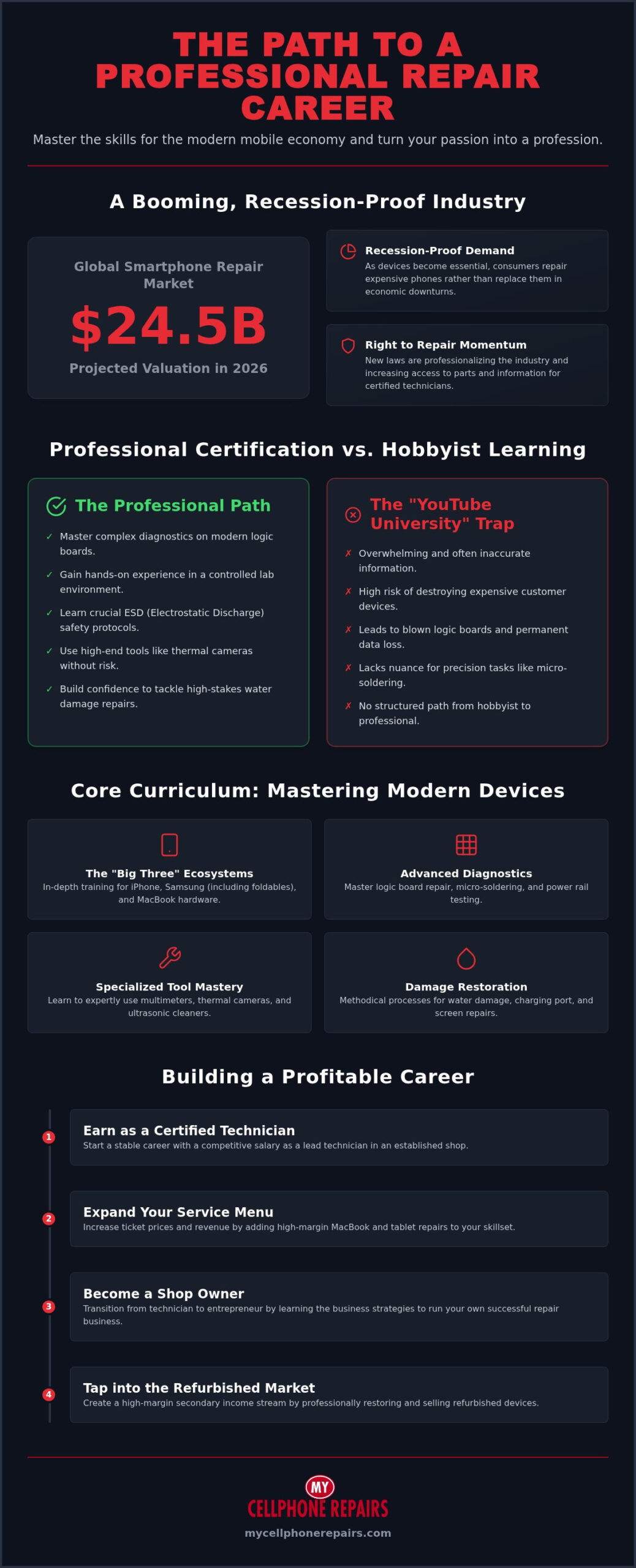
The global smartphone repair market is projected to reach a valuation of nearly $24.5 billion in 2026. This growth isn’t just a coincidence. It’s driven by the increasing complexity of devices and a significant shift in consumer behavior. A modern technician isn’t just someone who swaps screens. They are diagnostic specialists who understand 5G circuitry, foldable display mechanics, and complex software calibration. As the Right to Repair movement gains momentum with new laws and initiatives taking effect across the nation, the industry is becoming more regulated and professional.
Repair services remain recession-proof because mobile devices are now essential for daily life. When the economy slows down, consumers choose to repair their $1,200 smartphones rather than buying new ones. This trend also carries a heavy environmental benefit. Professional repair keeps toxic electronic waste out of landfills and reduces the carbon footprint associated with manufacturing new hardware. Choosing cell phone repair technician training means entering a field that is both financially stable and environmentally responsible.
Why Formal Training Beats Self-Taught Methods
Modern hardware like the Samsung Galaxy Z Fold 8 or the latest iPhone cameras require extreme precision. You can’t learn professional micro-soldering or ESD (Electrostatic Discharge) safety from a 10-minute video. “YouTube University” often leads to blown logic boards and permanent data loss because it lacks the nuance of hands-on instruction. Structured training provides a controlled lab environment where you can master high-end diagnostic tools without the risk of destroying a customer’s expensive device. It’s the difference between being a hobbyist and a trusted local authority. Enrolling in a recognized smartphone repair certification program gives you the credentials and hands-on diagnostic skills that employers and customers actually look for in 2026.
The Financial Potential of a Repair Career
Core Curriculum: Mastering Modern Device Architecture
Modern repair is no longer just about unscrewing a back plate. It requires a deep understanding of how circuits interact. Comprehensive cell phone repair technician training focuses on the “Big Three” ecosystems: iPhone, Samsung, and MacBook. You’ll move beyond basic component swapping and learn to diagnose the logic board itself. High-end tools like multimeters and thermal cameras are essential for pinpointing failures in the dense circuitry of a Samsung Galaxy S26 or an iPhone 17. Before enrolling in any program, it’s worth reviewing a detailed cell phone repair course curriculum to ensure the training covers the advanced diagnostic and micro-soldering skills that today’s market demands.
You need the right gear for these tasks. We teach students to use multimeters for voltage testing and thermal cameras to find heat signatures from shorted components. These specialized tools help you solve complex power issues that a simple visual inspection would miss. It’s about working smarter and respecting the customer’s investment in their high-end hardware.
IPhone and Samsung Screen and Battery Mastery
Screens have evolved into complex OLED and AMOLED assemblies. These parts are often software-locked to the original device. You’ve got to learn how to handle battery calibration and parts pairing issues that persist even with newer manufacturer repair assistants. Understanding the full scope of iPhone screen repair, including the critical quality gaps between OLED and LCD replacements, is essential knowledge for any technician working on modern Apple devices. In 2026, the Right to Repair movement provides technicians with greater access to official parts and software, though it doesn’t replace the need for precision manual skills.
Advanced Diagnostics and Water Damage Restoration
Liquid damage is a common crisis. We teach a methodical restoration process. It starts with a full teardown and ultrasonic cleaning to remove corrosion from hidden areas. You’ll learn to identify short circuits on the logic board by testing power rails. This is especially critical for the latest foldable models like the Galaxy Z Fold 8, where hinge mechanisms can trap debris and moisture. Mastering charging port repairs for USB-C and proprietary connectors is another vital skill that keeps customers coming back.
MacBook and Laptop Hardware Repair
Expanding into MacBook repair significantly boosts your revenue per ticket. These devices share similar diagnostic logic with smartphones but require different disassembly techniques. You’ll learn to replace fragile display assemblies and restore unresponsive keyboards or trackpads. Laptop-level hardware fixes are high-margin services because they save the customer from the massive cost of a full device replacement. If you want to see how these skills apply in a professional setting, consider exploring the Technician Training Program offered by active industry experts.
Professional Certification vs. Hobbyist Learning
Trying to learn through trial and error is a gamble. You might save money on tuition, but you’ll spend it on replacement parts for the boards you fry. Professional cell phone repair technician training provides a structured environment where mistakes are part of the learning process, not a financial disaster. This hands-on lab experience is vital. It allows you to practice on dummy boards until your movements are fluid and precise. Certification acts as a badge of reliability. It tells customers you’ve met a professional standard. This builds immediate trust in a market where people are protective of their personal data and expensive hardware. Understanding what a complete smartphone repair certification program covers — from board-level diagnostics to business operations — helps you choose a path that delivers real, marketable credentials.
The hidden costs of self-learning often outweigh the price of a course. One slipped screwdriver on a modern iPhone logic board can cost you hundreds of dollars in damage. Professional training eliminates this risk by teaching you the correct way to handle sensitive components from day one. You’ll gain the confidence to work on high-stakes devices without the constant fear of making a terminal mistake. It’s about moving from “guessing” to “knowing.”
The Value of Expert Mentorship
You can’t ask a video for feedback. Expert mentorship gives you real-time correction that you simply can’t find online. A master tech sees how you hold the tweezers or how you apply heat before you lift a chip. This prevents common beginner mistakes like ripped flex cables or long-screw damage. You also gain access to a network of professionals. These connections often lead to job placements or business partnerships that you won’t find in a YouTube comment section.
Mastering the Tools of the Trade
Technical knowledge is only half the battle. You must be proficient with the physical tools of the industry. Proficiency means you work faster and more safely, which directly impacts your daily earnings. A professional bench requires more than just a generic screwdriver set. Here is a basic checklist for a professional setup:
- Digital Microscopes: Essential for inspecting micro-soldering joints and trace repairs.
- Precision Heat Guns: Used for chip removal and safe screen separation.
- Anti-static (ESD) Mats: Protects sensitive components from static discharge.
- DC Power Supply: Helps diagnose power-up issues and battery shorts.
- Fume Extractors: Maintains a safe working environment during soldering.
When you invest in cell phone repair technician training, you learn how to calibrate and maintain these tools. You’ll understand the exact temperature settings for different types of solder and how to adjust your microscope for the best depth of field. This level of tool mastery is what separates a professional from a hobbyist.
Building a Profitable Repair Business
Mastering the technical side is only the first step. To thrive, you must shift from a technician mindset to a business owner mindset. Success depends on your ability to manage margins, lead times, and customer expectations. Professional cell phone repair technician training includes these business fundamentals because a great repair doesn’t matter if the shop isn’t profitable. You need to understand that customer service is a critical technical skill. Clear communication reduces stress for the customer and builds long-term loyalty. When you explain a complex logic board issue in simple terms, you position yourself as a trusted local authority.
Inventory management is where many new owners struggle. You can’t afford to tie up all your capital in every possible screen and battery. Focus on high-turnover parts for the most popular iPhone and Samsung models. Supplement your repair income by selling refurbished devices. This creates a circular revenue stream. You buy broken phones, use your skills to restore them, and sell them at a premium. It’s a high-margin addition to your daily repair volume that keeps your bench busy during slower periods.
Marketing Your Repair Services Nationally
Digital marketing is the backbone of a modern repair shop. You need a strong online presence that highlights your expertise and fast turnaround times. Reviews are your most valuable currency. A single detailed review about a successful water damage restoration can bring in dozens of new customers. Use your refurbished device inventory to drive traffic. People looking for a cheaper iPhone often realize they’d rather just fix their current one once they see your professional setup and transparent pricing. Consistency in your branding across social media and local listings builds the professional confidence customers look for during a technical crisis.
Operations and Quality Control
Efficiency comes from a repeatable workflow. Every device that enters your shop should follow a strict intake and testing process. Test all functions, including cameras, microphones, and sensors, before you start the repair and again before the customer leaves. This protects you from false claims and ensures the highest quality of work. Implement a reliable warranty system to give your customers peace of mind. Sourcing high-quality replacement parts is non-negotiable. Using cheap components leads to high return rates and a damaged reputation. Always vet your suppliers for consistency and return policies. If you’re ready to learn these business strategies from active industry leaders, enroll in our Technician Training Program today.
Enroll in the My Cellphone Repairs Training Program
Transitioning from a hobbyist to a professional requires more than just reading manuals. Our Technician Training Program sets the industry standard by focusing on practical, bench-ready skills that translate directly to the 2026 mobile economy. We move beyond basic theory to provide a learning environment that mirrors the daily operations of a high-volume repair chain. This program isn’t just an educational course; it’s a direct bridge to a career as a certified specialist. You’ll gain the confidence to handle high-stakes hardware from your very first day on the job. Our goal is to ensure you leave the program with the technical mastery and business logic needed to succeed in any professional setting.
What Sets Our Training Apart
Our “real-world” approach is built on years of active shop experience. You’ll practice on the same hardware you’ll encounter in the field, from the latest iPhone models to complex MacBook logic boards. We place a heavy emphasis on high-margin, complex fixes like water damage restoration and charging port specialization. These skills are what separate top-tier technicians from the rest of the market. You can view our course modules to see the full breadth of our technical curriculum. Our instructors are master technicians who provide real-time feedback, ensuring your technique is precise and safe. This hands-on repetition builds the muscle memory required for delicate micro-soldering and diagnostic tasks.
Your First Step Toward Certification
Securing your future in the repair industry is a straightforward process. Visit our national portal to submit your application and view upcoming session dates for our cell phone repair technician training. We keep our class sizes managed to ensure every student receives individual attention and mentorship. The support doesn’t end when you receive your certificate, either. Our graduates gain access to an exclusive network of professionals for ongoing guidance and troubleshooting. Whether you’re looking to land a high-paying job or start your own shop, this program provides the foundation you need. Take the first step toward career mastery and join a community of experts who are leading the mobile repair industry. Start your journey today and become the technician that customers trust with their most valuable devices.
Launch Your Future in Professional Device Repair
The mobile economy is moving fast. Mastering the “Big Three” ecosystems and adopting a business-owner mindset will transform your financial future. Professional cell phone repair technician training is the most efficient way to bridge the gap between watching videos and performing high-stakes diagnostics with total confidence. By choosing a structured path, you avoid the hidden costs of damaged components and build a reputation for local reliability.
Our program offers comprehensive hands-on training for iPhone, Samsung, and MacBook hardware. You’ll receive expert instruction from real-world repair specialists who focus on high-value diagnostics and sustainable business growth. If you’re ready to learn from the best in the industry, Join Our Professional Technician Training Program today. You have the potential to become a leader in this recession-proof field. Take the first step toward your career mastery right now.
Frequently Asked Questions
How long does cell phone repair technician training usually take?
Most professional programs range from 4 to 10 days depending on the specialization. Our intensive cell phone repair technician training lasts 4 days and includes a business course to prepare you for immediate work. Advanced micro-soldering bundles can extend this to 8 days. This timeline is designed to maximize information retention without keeping you away from your career for weeks. It’s a fast-paced environment that prioritizes practical skill over theory.
Do I need a background in electronics to start the course?
You don’t need a formal background in electronics to start. Most successful technicians begin with zero technical experience and learn everything through repetition and expert guidance. Our training starts with the basics of device architecture and safety before moving to complex repairs. As long as you have good hand-eye coordination and a willingness to learn, you can master the technical skills required for this industry.
Is certification required to work as a phone repair technician?
Certification isn’t legally required to work in a repair shop, but it’s essential for building customer trust and securing high-paying jobs. In the 2026 market, many shops won’t hire technicians without some form of professional validation. Certification proves you understand safety standards and modern diagnostic techniques. It sets you apart from hobbyists and shows you’re serious about the quality of your work.
What is the average salary for a certified repair tech in 2026?
Salary varies based on your location and whether you work for a chain or own your own shop. Skilled technicians in 2026 often command competitive rates due to the high demand for specialized services like foldable screen repair. Those who add MacBook and tablet repair to their skill set typically see higher earning potential. Business owners who successfully market their services can significantly exceed the industry average through high-margin repairs and refurbished sales.
Can I learn microsoldering as part of the technician training?
Yes, micro-soldering is a core component of advanced cell phone repair technician training. You’ll learn how to identify short circuits and replace tiny components on the logic board using professional-grade microscopes and heat guns. This skill is vital for fixing power issues, water damage, and charging port failures. Mastering these techniques allows you to offer board-level repairs, which are far more profitable than simple screen or battery swaps.
What tools do I need to buy before starting a training program?
You don’t need to purchase any tools before starting our program. We provide all the professional-grade equipment you’ll need during the course, including microscopes, heat guns, and multimeters. This allows you to test different brands and models before investing in your own bench setup. After graduation, we provide a recommended tool list to help you source high-quality gear that fits your budget and specific repair goals.
Is it better to take an online or in-person repair course?
In-person training is significantly more effective than online courses for this specific field. Repair is a tactile skill that requires a master technician to watch your technique and correct your hand placement in real-time. You can’t get that level of feedback from a video. In-person labs also give you access to expensive diagnostic tools that are often too costly for beginners to buy on their own while still learning.
Does the training cover MacBook and laptop repairs as well?
Our comprehensive program includes training for MacBook and laptop hardware. Expanding your skills beyond smartphones is essential for maximizing your revenue per customer. You’ll learn how to diagnose power rails, replace display assemblies, and restore keyboards on modern laptops. Since many internal components share similar diagnostic logic with smartphones, adding laptop repair to your repertoire is a natural and highly profitable progression for any professional technician.